A first dive or a course
If you have never dived, start with a try dive (Discover Scuba Diving), open to anyone aged 10 and over. After a short briefing, an instructor takes you down and stays with you, at a shallow depth. One Hurghada centre charges €55 for two introductory dives in 2026; others list formats from €50 to €80.
To dive on your own with a buddy, you need a certificate. The PADI Open Water course takes three to four days: theory, practice in shallow water and four dives from the boat. Prices start at around €290 to €300, without the PADI materials and the certification fee, so ask for the full price. The minimum age is also 10.
Plan the course at the start of your stay, so that the last days are free for dives you choose yourself.
A day on a dive boat
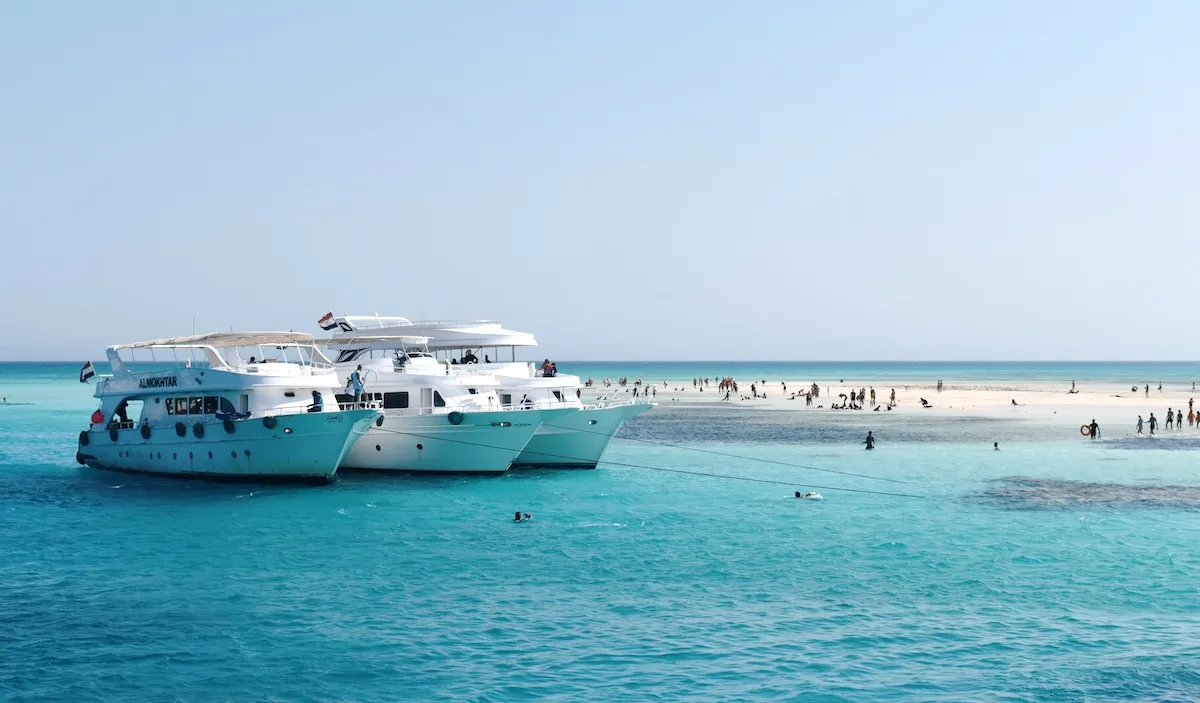
Most diving in Hurghada is done from day boats. You are picked up at your hotel, the boat leaves the marina in the morning, and you make two dives on different reefs, with lunch on board between them. One centre's 2026 price list gives €60 for the day with two dives, including tanks, weights, the guide, lunch, soft drinks and transfers from central Hurghada. Renting a full set of equipment costs €20 a day more. Other offers start at €45, with different inclusions.
Compare what is included before you book: equipment, transfers from your area and marine park fees vary from one centre to the next. Some hotels have a dive centre on site, such as the Steigenberger Aldau Beach Hotel, which saves the transfer.
Dive sites by level
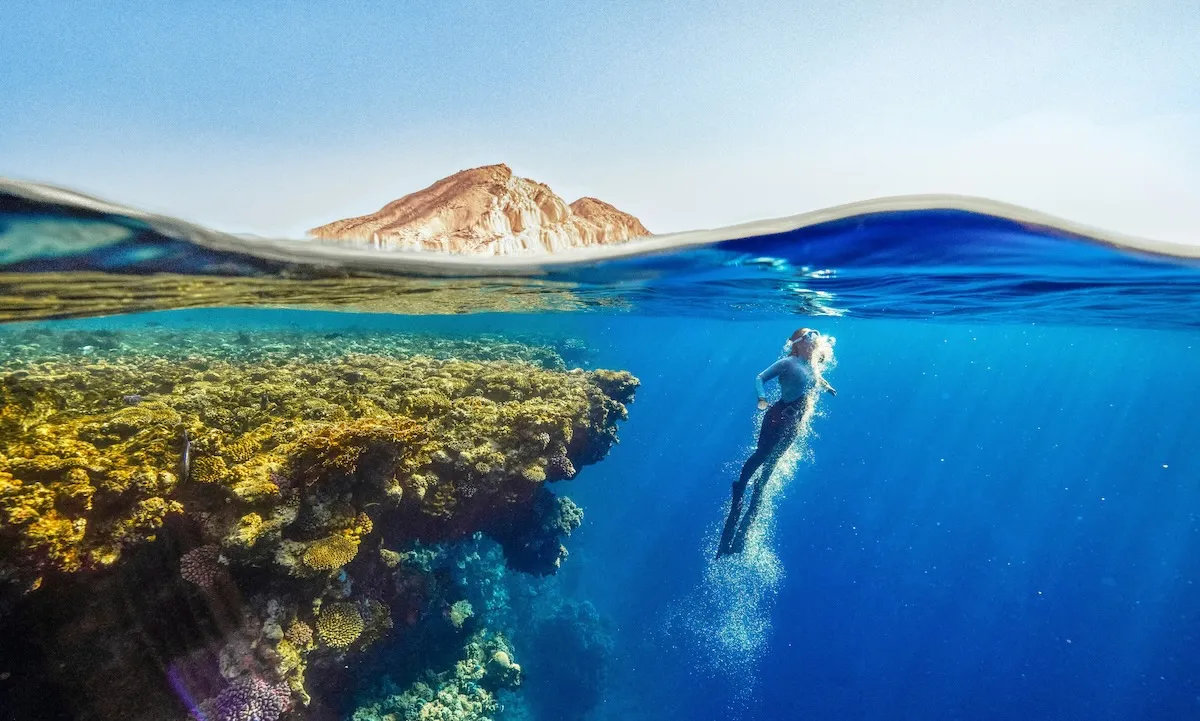
The reefs off Hurghada suit every level, and the dive guide picks the site and the depth for your group. The depths below are approximate.
- Beginners: the reefs around the Giftun Islands, with shallow coral gardens; Gota Abu Ramada, nicknamed "The Aquarium", at about 5 to 18 metres, with plenty of reef fish and garden eels; the sheltered parts of Shaab El Erg, where dolphins are sometimes seen, although no trip can promise them.
- Intermediate: Erg Somaya, with coral towers and soft corals at about 5 to 28 metres, often with a current; Umm Gamar, a reef with a wall.
- Experienced: Carless Reef, a plateau at 12 to 25 metres with deeper drop-offs; the wreck of the El Mina, a minesweeper sunk near Hurghada in 1969, which lies at about 26 to 33 metres.
Further north, the wrecks of Abu Nuhas are a longer trip, for experienced divers. Ask the dive centre which sites it plans for the week, and say if you want a particular one: the choice depends on the wind and the group.
Liveaboards
To reach the most famous sites of the northern Red Sea, divers board a liveaboard, a boat on which you sleep and dive for several days. Many trips from Hurghada last eight days and seven nights. The northern route includes the wreck of the Thistlegorm, Ras Mohammed and Tiran; the southern route heads out to Brothers, Daedalus and Elphinstone, offshore reefs for experienced divers.
Listed prices for 2026 range from about US$890 to US$2,300 per person, depending on the boat, the route and the date. Marine park, port and service fees are sometimes extra.
Safety and rules
Diving in Egypt is regulated by the Chamber of Diving and Water Sports (CDWS), which applies the international standards of recreational diving. The maximum depth on air is 40 metres, and only if your training and experience allow it; your certificate and your dive centre usually set a shallower limit.
The nearest recompression chamber is at El Gouna Hospital, whose diving and hyperbaric medicine centre takes emergencies 24 hours a day, about 20 minutes from the airport. Take out diving insurance that covers recompression treatment and evacuation, and ask your dive centre about its emergency plan before your first dive.
When to dive
You can dive in Hurghada all year. The sea is at its coolest in February and March, at about 22°C, and its warmest in August, at 28 to 29°C. In winter, ask your dive centre for a thicker wetsuit. The prevailing wind blows from the north and can make the crossing choppy; on windy days, boats change their sites.
Practical information
- Try dive: from age 10, about €50 to €80.
- Open Water course: three to four days, from about €290 to €300, plus PADI materials and certification.
- Day boat: two dives, about €60 with lunch and transfers; full equipment about €20 a day.
- Liveaboard: often eight days, about US$890 to US$2,300 per person.
- Recompression chamber: El Gouna Hospital, 24 hours a day.
- Sea temperature: about 22°C in February and March, 28 to 29°C in August.
For snorkelling and boat trips without diving, see our guides to the Giftun Islands and things to do in Hurghada. To stay close to a dive centre, see our selection of the best hotels in Hurghada.
Frequently asked questions
Can you dive in Hurghada without a certificate?
Yes, with a try dive (Discover Scuba Diving), open to anyone aged 10 and over. An instructor stays with you, at a shallow depth. Expect to pay around €50 to €80, depending on the format.
How long does the Open Water course take in Hurghada?
Three to four days, with theory, practice in shallow water and four open-water dives from the boat. Prices start at around €290 to €300, without the PADI materials and certification fee.
How much does a day of diving cost in Hurghada?
Around €60 for two dives from a boat, with tanks, weights, guide, lunch and transfers from central Hurghada at one dive centre in 2026. Full equipment rental adds about €20 a day.
Where is the nearest recompression chamber?
At El Gouna Hospital, about 20 minutes from Hurghada International Airport. Its diving and hyperbaric medicine centre takes emergencies 24 hours a day. Ask your dive centre about its emergency plan before your first dive.